

Unlimited Prepaid eSIM Plans That Actually Work Right Now
What if you could get mobile data without a physical SIM card or a long-term contract? A prepaid eSIM is a digital SIM profile you purchase online and activate by scanning a QR code or entering a code. It works by loading your phone with a temporary data plan before you need it, ensuring you only pay for what you use. This provides instant connectivity in a destination without the hassle of swapping physical cards.
What Is a Prepaid Digital SIM and How It Works
A prepaid digital SIM, or eSIM, is a programmable chip embedded in your phone that replaces the physical plastic card. You buy a data plan online, and the carrier sends a QR code or app to install the profile directly into your device—no waiting for mail or fumbling with tiny trays. Once activated, the eSIM links to local networks just like a regular SIM, but you control costs upfront; you pay for a set amount of data or days, and service pauses once your balance hits zero. Imagine landing in Tokyo and scanning a QR code from your hotel’s email before you even unpack—that’s how you stay connected without hunting for a shop. Your phone becomes its own global kiosk, letting you switch between Japanese and Thai carriers on your next trip. There’s no contract to break, only digital vouchers you top up with a tap. This freedom turns a frantic airport queue into a calm moment of instant connection.
Distinguishing eSIM from Traditional Plastic SIM Cards
An eSIM is a permanently embedded chip, while a traditional plastic SIM is a removable card. For prepaid use, this means you activate a prepaid eSIM digitally via a QR code or app, eliminating the physical swap required by plastic SIMs. With a plastic SIM, you must insert the card into a tray; with eSIM, you simply download a profile directly onto your device. This distinction is crucial for instant prepaid eSIM activation and management.
- eSIMs are soldered into the device; plastic SIMs are physical removable cards.
- Switching prepaid plans on eSIM is done via software settings, not by changing cards.
- eSIMs allow multiple carrier profiles stored simultaneously; plastic SIMs hold only one.
- eSIMs free the SIM tray for an additional physical SIM on dual-SIM phones.
The Activation Process: Scanning a QR Code to Go Live

Once you buy a prepaid eSIM, you’ll receive a QR code by email. Scanning that code with your phone’s camera—while on Wi-Fi—triggers the instant eSIM activation. Your device downloads the profile, and within seconds you see “Cellular Plan Added.” You must stay connected to Wi-Fi until the profile finishes installing, then toggle mobile data on.
- Go to your phone’s Settings > Cellular > “Add eSIM” before scanning.
- Keep the QR code handy in case you need to reinstall it later.
- Restart your phone if the new plan doesn’t appear immediately after scanning.
Why Travelers and Minimalists Are Switching to This Tech
Travelers abandon physical SIMs because a prepaid eSIM eliminates hunting for local vendors upon arrival, allowing immediate connectivity after landing. Minimalists prefer it for reducing plastic waste and retaining a single device without swapping cards. The key advantage is instant global activation from a mobile app, enabling users to secure a data plan before departure for any destination. This eradicates roaming fees while preserving the phone’s physical SIM slot for a home number, streamlining travel logistics and device simplicity.
Travelers and minimalists switch to this tech for instant connectivity and clutter-free, single-device international roaming without physical cards.
Top Benefits of Choosing a Non-Contract Mobile Profile
A non-contract mobile profile with a prepaid eSIM puts you in complete control, offering unmatched flexibility with no credit checks or long-term commitments. You can instantly activate a data plan, top up as needed, and switch providers or plans without penalty. This setup is ideal for avoiding surprise bills, as spending is strictly limited to what you preload. It transforms your connectivity into a pay-as-you-go utility, rather than a restrictive subscription. The eSIM’s digital nature further eliminates physical SIM swapping, allowing seamless travel management by downloading a local profile on arrival. You gain absolute freedom from carrier lock-in and can adapt your service to fluctuating needs, making it the most practical choice for budget-conscious or frequently traveling users. No contracts mean no termination fees, just pure, transparent mobile access.
No Credit Checks or Long-Term Commitments Required
Forget stressful credit checks and being locked into a year-long plan. With a prepaid eSIM, you grab a no-commitment mobile plan that starts working immediately. You simply pay for what you need upfront, with zero obligation to stay for a set period. This means you can switch providers or pause your service whenever you want, without penalty. It’s perfect for travelers or anyone testing a new network.
- No credit score inquiry means your financial history stays private.
- You can cancel or change your plan at any time, with no fees.
- Pay only for the data or days you actually need, nothing more.
- No long-term contracts give you total freedom to adjust on the fly.
Instant Top-Ups and Flexible Data Plans
The real win of a prepaid eSIM is the total control you get with flexible data plans. Forget rigid contracts; you simply pick a plan that fits your exact needs, then instantly top up when you run low. Here’s how it works: you buy a small data pack, use it until it’s gone, then add another. The sequence is simple:
- Your data depletes.
- You purchase a new top-up from the app.
- The new allowance activates immediately without any wait or bill shock.
This avoids overpaying for data you don’t use and means you are never locked into a set monthly payment.
Keeping Your Primary Number While Using a Secondary Line
One major perk of a prepaid eSIM is keeping your primary number active while testing a secondary data line. You simply install the new eSIM for data and leave your main SIM for calls and texts. Your friends and bank still reach you on your original number, while the second line handles streaming or local apps abroad. No need to switch SIMs or alert contacts; both lines work in tandem. This setup is ideal for travel or separating work data without losing your personal number’s accessibility.
You keep your primary number fully reachable while a prepaid eSIM powers a secondary line for data or local tasks, all without swapping cards or notifying contacts.
How to Select the Best Pay-As-You-Go Virtual SIM

To select the best pay-as-you-go virtual SIM, prioritize providers offering instant eSIM activation and top-up flexibility via their app, ensuring you avoid hidden daily fees. Check coverage maps for your specific destinations, as not all prepaid eSIMs roam equally. Compare data pricing strictly per gigabyte or megabyte, and look for “data-only” plans if you don’t need a local number, which often cost less. Always verify the eSIM’s tethering policy—some plans block hotspot use. A short Q&A: *How do I test a prepaid eSIM’s speed before buying?* Look for plans offering a free trial or low-cost starter pack, like a 1GB bundle, to check real-world latency and connectivity.
Comparing Coverage Maps and Network Partnerships
When picking a prepaid eSIM, don’t just look at pretty coverage maps; compare who actually owns the towers behind them. A provider’s network partnership strategy determines if you latch onto a premium local operator or a secondary budget carrier. Check if the eSIM roams onto multiple partners in each country, as a single weak tie could leave you with spotty 4G in rural areas. Maps often show theoretical reach, while real performance depends on which partner hosts your connection.
Comparing coverage maps against actual network partnerships reveals where you’ll truly get strong signal versus where you’ll struggle.
Data Speeds, Throttling Policies, and Fair Use Limits
When selecting a pay-as-you-go virtual SIM, scrutinize throttling policies and fair use thresholds because advertised 4G/5G speeds often drop to crippled 128 kbps after exceeding a daily or monthly cap. Prioritize providers that disclose exact soft limits versus hard stops, as some permanently restrict video streaming while others only deprioritize during congestion. For reliable browsing, avoid plans with ambiguous “unlimited” labels—these typically throttle before 10GB.
- Confirm if throttling resets daily, weekly, or monthly to avoid surprise slowdowns during short trips.
- Choose plans offering at least 25 Mbps post-throttle for comfortable voice calls and social media.
- Verify if video resolution is capped at 480p under Singapore eSIM fair use limits to prevent buffering.
- Check if basic maps and messaging apps remain usable during reduced-speed periods.
Evaluating App-Based Management vs. Web Portals
When selecting a prepaid eSIM, evaluating app-based management versus web portals is crucial for daily usability. Apps typically provide one-tap activation, real-time data monitoring, and push notifications for top-ups, making them ideal for on-the-go adjustments. In contrast, web portals offer a broader interface for managing multiple lines or complex billing histories but require a stable internet connection. The core difference lies in convenience versus comprehensive oversight.
- Apps streamline balance checks and plan changes through instant notifications and background updates.
- Web portals allow detailed transaction logs and bulk SIM management without phone storage constraints.
- Apps often integrate with phone settings for automatic APN configuration, unlike manual portal setup.
- Web portals provide a full dashboard view, useful for travelers juggling multiple regional eSIMs.
Step-by-Step Setup Without a Physical Card
To set up a prepaid eSIM without a physical card, first purchase a data plan from a provider’s website or app. You will receive a QR code or a confirmation code. On your device, go to Settings > Cellular > Add eSIM. Scan the QR code or enter the details manually. The profile activates instantly, often requiring a Wi-Fi connection for initial download. Q: Can I switch phones without a physical card? A: Yes, by re-downloading the eSIM profile from the provider’s account portal onto the new device. Ensure your phone is unlocked and eSIM-compatible before proceeding.
Checking Device Compatibility Before Purchase
Before purchasing a prepaid eSIM, prioritize checking device compatibility to avoid activation failures. Visit your phone’s settings menu to confirm it supports eSIM functionality, typically under “Cellular” or “Mobile Data.” Verify that the device is carrier-unlocked, as locked phones may reject third-party eSIMs. Cross-reference your phone model against the eSIM provider’s compatibility list, paying attention to region-specific models, as some international variants lack support. For iPhones, ensure iOS version 12.1 or later; for Android, check for built-in eSIM manager. Skipping this verification can render your purchase unusable.
| Aspect | What to Check |
|---|---|
| Software | iOS 12.1+ or Android eSIM manager |
| Carrier | Unlocked status |
| Model | Region-specific compatibility |
Downloading the Provider App or Receiving the eSIM Profile
Once you’ve picked your prepaid eSIM plan, the setup starts with downloading the provider app or receiving the eSIM profile. Most carriers send the profile via email or their app right after purchase. Here’s the typical flow:
- Open the provider’s app or tap the link in your confirmation email.
- Follow on-screen prompts to install the eSIM profile—your phone handles the rest automatically.
- When done, the profile activates, and you’ll see “Cellular Plan Ready” or similar message.

If you get a QR code instead, just scan it from your phone’s settings. No physical card needed—just a few taps and you’re good to go.
Installing on iOS, Android, and Recent Handsets
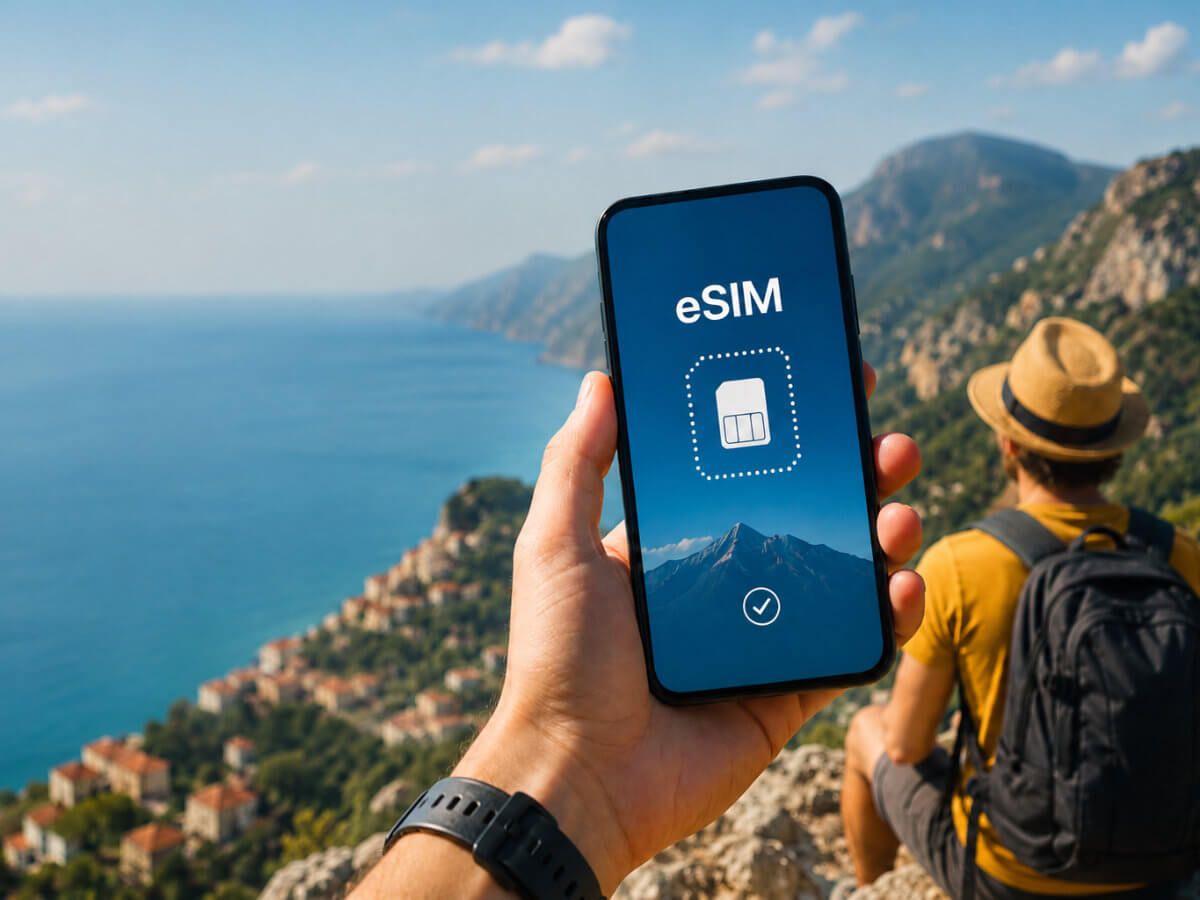
Once you’ve picked your prepaid eSIM, installing it varies slightly by device. On iOS, Android, and recent handsets, you’ll typically scan a QR code from your provider’s email or download their app to trigger automatic setup. For iPhone, go to Settings > Cellular > Add eSIM. Android users head to Settings > Network & Internet > SIMs > Add Carrier. Newer devices, like Pixel 7 or Galaxy S23 series, often let you install directly from the carrier app without touching any menu. Just confirm the plan name, and within a minute your data is active, no physical card needed.
Real-World Use Cases for Temporary Connectivity
A prepaid eSIM is perfect when you need temporary connectivity without a long-term contract. For a two-week vacation in Japan, you can install one before boarding the plane and have data as soon as you land for maps and translation. It’s also great for remote workers who spend a month in a co-living space in Mexico—buy a 30-day plan, hotspot your laptop, and ditch the local SIM hunt. Q: What if my flight gets delayed and I need extra days? A: Just top up the same eSIM with another short-term plan from the app, no need to visit a store or swap cards.
International Roaming Without Racking Up Fees
When traveling internationally, a prepaid eSIM eliminates exorbitant roaming fees by allowing you to purchase a local or regional data plan before departure. Instead of activating your home carrier’s daily roaming pass, you install a prepaid eSIM profile that connects to a local network at local rates. The process for avoiding roaming charges follows a clear sequence: deactivate your primary line’s data roaming in settings; install the prepaid eSIM profile before you leave; activate it upon arrival; and use it as your default data source. This ensures you pay only the flat plan cost, not per-minute or per-MB surcharges.
- Check your destination’s prepaid eSIM providers for a data-only or voice-and-data plan.
- Purchase and install the eSIM profile while still connected to Wi-Fi at home.
- Upon arrival, disable cellular data on your primary line and enable data switching to the prepaid eSIM.
- Monitor usage via the provider’s app to confirm you stay within the plan’s data allowance.
Short-Term Work Assignments and Digital Nomad Life
For short-term work assignments and digital nomad life, a prepaid eSIM is a perfect match. You land in a new city for a two-week project or a month-long co-working retreat, and within minutes you can have local data. Reliable remote work connectivity is yours without hunting for a physical SIM or dealing with a lengthy contract. This means you can hop between a café in Lisbon and a beach in Bali without your employer ever noticing a glitch in your Zoom call.
- Activate a plan specific to your assignment’s duration, then ditch it when you pack up.
- Keep your home number active for two-factor authentication while using a local data line for work tasks.
- Top up instantly if your project extends, avoiding any service gaps.
Backup Data for Emergencies or Network Outages
When your main carrier goes down during a storm or outage, a prepaid eSIM acts as a reliable emergency backup connection. You can activate it instantly without visiting a store, keeping your maps, messaging, and essential apps online. Preload a small data package beforehand so you’re never stranded without directions or the ability to call for help. This works perfectly for both sudden network failures and planned trips where roaming might fail.
- Purchase a minimal data pack (e.g., 1GB) and leave it inactive until needed.
- Switch to your eSIM profile the moment your primary SIM loses signal.
- Use it to access ride-hailing apps, emergency contacts, or weather alerts.
- Keep the eSIM installed even when not traveling—it stays ready for local outages.
Common Pitfalls and How to Avoid Them
A common pitfall is accidental eSIM deletion before using the data, often during installation; avoid this by carefully following the provider’s scanning or manual entry steps and not removing the profile until activation is confirmed. Another frequent mistake is assuming immediate activation upon purchase, when many prepaid eSIMs require an internet connection or a specific network selection to start—always install the eSIM while still on Wi-Fi. Users also face compatibility confusion, ignoring whether their device is dual-SIM active or standby; check your phone’s eSIM and IMEI support before buying. To prevent wasted funds, confirm the validity period and top-up rules, as some prepaid eSIMs expire if unused for a set number of days.
Accidentally Deleting the Profile Before a Trip
A critical pitfall with prepaid eSIMs is accidental profile deletion before departure, which often occurs when users clear device storage or reset network settings. This renders the eSIM permanently unusable, as most prepaid profiles are single-install. To avoid this, manually archive the QR code or activation code in a secure, offline location like a password manager or printed backup. Do not rely on email alone if offline access fails.
Q: Can I recover a prepaid eSIM after accidentally deleting it? A: Typically no, because prepaid eSIMs are activated once and locked to a device’s unique eSIM chip; re-installation usually requires purchasing a new plan.
Hidden Fees in Cheap International Plans
Cheap prepaid eSIM plans often lure users with low upfront costs but conceal hidden activation or service fees. These can appear as mandatory “connection charges” per top-up, or “currency conversion surcharges” when paying in a different currency. Some providers impose small daily “network access fees” that aren’t listed on the initial purchase screen. Always expand the total cost breakdown before checkout; look for asterisks next to the price. A common trick is a “free” trial plan that automatically debits a full-price renewal fee after a few days.
Hidden fees in cheap international plans typically include activation costs, currency surcharges, and automatic renewal charges not shown upfront.
Device Locking and IMEI Restrictions to Watch For
When using a prepaid eSIM, device locking restrictions can render your eSIM profile unusable on another handset. Verify your phone is carrier-unlocked before purchase, as a locked device ties the eSIM to a specific network, blocking installation of other provider profiles. IMEI restrictions also apply; some prepaid eSIMs are IMEI-bound, meaning they only function on the initially activated phone. If you factory-reset or change devices, the eSIM may deactivate permanently.
- Check your phone’s carrier unlock status via Settings > General > About (iPhone) or settings menu (Android).
- Confirm the eSIM provider does not lock the profile to a single IMEI before scanning the QR code.
- On dual-SIM devices, ensure the IMEI you activate matches the slot intended for eSIM use.
Comparing Budget Options vs. Premium Providers
When you land in a new country, the budget eSIM is the loud chatter at the airport café—cheap and fast, but your video call drops the moment you step into the metro. I once grabbed a $5 regional plan, only to spend an hour chasing down a support bot for a data top-up that never arrived. Premium providers trade that stress for seamless roaming with direct carrier access, so your WhatsApp messages don’t stall in dead zones. The catch? You’ll pay triple the price for that peace. Yet, if your trip hinges on a single critical map or email, the budget option’s “low priority” throttle can turn a smooth layover into a frantic search for public Wi-Fi. The real comparison isn’t dollars versus speed—it’s whether you risk your connection or your wallet.
Regional Specialists Offering Local Rates
For budget-conscious travelers, regional specialists offering local rates provide a crucial middle ground. These providers focus on a specific continent or country cluster, securing favorable wholesale deals from local carriers. This allows them to pass on prices significantly lower than global premium brands, often matching local physical SIM costs. You sacrifice some convenience, as coverage is limited to that region. However, for a single-region trip, their prepaid eSIMs deliver competitive, pay-as-you-go data without the steep markup of universal plans, making them ideal users who prioritize cost over seamless multi-country roaming.
Global Plans with Multi-Country Roaming Bundles
When comparing budget options vs. premium providers, global plans with multi-country roaming bundles are a game-changer for frequent travelers. Budget prepaid eSIMs often offer these bundles at a lower cost but might cap data speeds or limit coverage to specific regions like Europe or Asia. Premium providers, meanwhile, give you faster LTE/5G speeds across more countries, plus simple top-ups when you run out. To pick the right plan:
- Check the bundle’s active countries—budget plans sometimes skip smaller nations.
- See if data is shared across destinations or per-country capped.
- Confirm hotspot tethering is allowed, as budget options often restrict it.
Customer Support Quality Across Different Brands
When comparing budget vs. premium prepaid eSIM brands, customer support quality diverges sharply. Budget providers often rely on automated chatbots and delayed email responses, leaving users stuck with activation failures or data issues. Premium brands like Airalo or Holafly offer live chat, phone support, and dedicated troubleshooting. A budget user might wait hours for a simple network reset; premium support typically resolves such issues in minutes. Does faster support justify the higher cost? Priority support access often determines whether a minor setup glitch becomes a ruined trip or a quick fix.
Q: Which brand has the worst customer support for prepaid eSIM troubleshooting?
A: Among major budget options, budget eSIM sellers like Nomad often receive complaints about generic, script-heavy responses that fail to resolve specific carrier conflicts, whereas Ultra Mobile’s premium tier includes real-time engineers.